Sluit menu
Binnenland
Buitenland
Economie
Den Haag
Cultuur
Wetenschap
Sport
Opinie
Columnisten
Tech en Media
Boeken
Leven
Slim leven
In Beeld
Carrière
Klimaat
Recht
Podcast
Archief
Luister naar
Commentaar
Ombudsman
Puzzels
Magazine
Service
Webwinkel
Familieberichten
Over NRC
Service
Bezorgservice
Onderbrekingsservice
Verhuisservice
Mijn gegevens
Mijn abonnementen
FAQ Digitaal Lezen
Nieuwsbrieven
Veelgestelde vragen
Mijn leeslijst
Digitale krant
Wachtwoord vergeten
Menu
NRC
Abonneren
Mijn nieuws
Podcasts
Digitale krant
Puzzels
Mijn NRC
Terug
Lees meer
Inloggen
Neem een abonnement
Mijn nieuws
Mijn leeslijst
Mijn geschiedenis
Digitale krant
Nieuwsbrieven
Onderwerpen
Ik ben abonnee
Neem een abonnement
Instellingen
Weergaveopties
Uitloggen
Hoe kunt u ons bereiken?
Vanwege het coronavirus werken onze medewerkers thuis.
Service
Privacy-instellingen
Notificaties
Lichte weergave
Donkere weergave
Volg instellingen van mijn apparaat
Bezorgservice
Vakantieservice
Verhuisservice
Mijn gegevens
Mijn abonnementen
Abonnement delen
Gedeeld abonnement
FAQ Digitaal Lezen
Veelgestelde vragen
Wachtwoord vergeten
Mijn nieuws
Binnenland
Buitenland
Economie
Den Haag
Cultuur
Wetenschap
Opinie
Boeken
Leven
Carrière
Webwinkel
Puzzels
Al abonnee?
Inloggen
Vandaag
Zorg
Meer conflicten met schuldeisers bij commerciële huisartsenketen Co-Med
Verschillende schuldeisers hebben ruzie met Co-Med over de rekeningen die zij stuurden naar Co-Med Zorg BV, het bedrijfsonderdeel waarin alle huisartsenpraktijken zijn ondergebracht.
Vaccinaties
Onderzoek: in halve eeuw voorkwamen vaccinaties ruim 154 miljoen doden
UNICEF en de WHO analyseerden het effect van vijftig jaar vaccineren. Wereldwijd voorkwamen de prikken miljoenen doden. Alleen al het vaccin tegen mazelen is goed voor 94 miljoen minder sterfgevallen.
Vandalisme
Partijkantoor ChristenUnie beklad, partij overweegt aangifte
Mensen schrijven en plakken „dingen op het kantoor die niet oké zijn”, zei partijleider Mirjam Bikker woensdag. „Woorden als dat wij van de genocide zijn en dat soort dingen.”
Skiën
Nederlandse skibond is ‘verguld’ met de komst van tweevoudig olympisch kampioen Marcel Hirscher
De Oostenrijkse topskiër Marcel Hirscher (35) gaat na vijf jaar zijn comeback maken. Hij zal uitkomen voor Nederland, het land van zijn moeder. „Ik wil vooral weer aan wedstrijden meedoen omdat ik het leuk vind.”
Asielzoekers
IND moet asielaanvragen Palestijnen onmiddellijk in behandeling nemen
Het demissionaire kabinet besloot in december dat asielaanvragen van Palestijnen uit Gaza en de Westelijke Jordaanoever moesten wachten. De IND moet die aanvragen per direct toch gaan behandelen, oordeelt de Raad van State.
Rechtbank Maastricht
Nieuw deskundigenonderzoek in zaak ‘Thijs H.’
Thijs Hermans verwijt ggz-instelling Mondriaan dat de behandelaars de verkeerde diagnose stelden, dat hij ten onrechte een psychose-aanjagend ADHD-medicijn kreeg voorgeschreven en dat hij zo in de psychose raakte waarin hij in 2019 drie mensen doodstak.
Faillissement
‘Veelbelovend’ techbedrijf Rodeo failliet verklaard, oprichter onvindbaar
De Amsterdamse start-up beloofde investeerders duizelingwekkende groei, maar is nu failliet. De oprichter lijkt onvindbaar.
Gaza-oorlog
Israëlische media: invasie van Rafah is aanstaande, voorbereidingen evacuatie in volle gang
De invasie kan al „heel snel” beginnen, melden internationale persbureaus. De Zuid-Gazaanse stad wordt door Israël gezien als het laatste bolwerk van Hamas, maar het is ook de plek waar meer dan een miljoen ontheemde Gazanen hun toevlucht hebben gezocht.
Laatste nieuws
Meer
Grensoverschrijdend gedrag
VWS: 82 procent van de werknemers geeft aan zich sociaal veilig te voelen op werk
Automarkt
Tesla ziet verkoop elektrische auto’s dalen en vervroegt komst goedkoper model
Australië
Zeven tieners in Sydney opgepakt na steekpartij in kerk
Lerarentekort
Rekenkamer: ingehuurde docent kost bijna twee keer zoveel als leraar in vaste dienst
Stikstof
Het Rijk heeft pas 6 van de 1.800 boerenbedrijven zonder stikstofvergunning gelegaliseerd
Analyse
Landenpaviljoens op de Biënnale
‘Kunst zal ons niet redden van bommen’, zei Olena Zelenska bij de opening. Maar wat heeft de Biënnale in Venetië wel te bieden?
Mensenrechten
Amnesty: wereldleiders negeren mensenrechten, AI bedreigt rechtsstaat
Mestcrisis
Boerenorganisaties presenteren alternatief plan om mestproblematiek aan te pakken
Argentinië
Honderdduizenden Argentijnen demonstreren tegen onderwijsbezuinigingen Milei
Luchtvaart
Toename van Russische verstoring Europese luchtvaart
Meest gelezen
Reportage
Regenbroeken
Sukkels zijn het, in hun regenbroek met reflectorstrepen
Faillissement
‘Veelbelovend’ techbedrijf Rodeo failliet verklaard, oprichter onvindbaar
Ophef in de wetenschap
Tandarts vindt kaak in de tegelvloer van zijn ouders, ‘vrijwel zeker van een mens’
Belastingen
Hoe chemiebedrijf OCI zijn aandeelhouders miljarden uitkeert en de fiscus met lege handen achterblijft
Vandalisme
Partijkantoor ChristenUnie beklad, partij overweegt aangifte
Meer nieuws
Niet te missen
Column
Coen van Zwol
Worden gamepersonages de nieuwe superhelden?
Het succes van de scifiserie ‘Fallout’ is een nieuwe aanwijzing dat videogame-adaptaties de toekomst hebben in Hollywood. Want die hebben een ongelimiteerd seriepotentieel. Worden ze de nieuwe kaskoe voor Hollywood?
Analyse
Musical Awards
Musical Awards 2024: voor avontuur moet je naar de kleine musicals – of naar de grote favoriet
2024 was een goed musicaljaar, met veel veilige bekende, maar ook verrassende kleine producties, waarin opvallend veel maatschappijkritiek een rol speelt. Bijna honderd genomineerden maken woensdag kans op een Musical Award. De winnaar lijkt al vast te staan.
Ophef in de wetenschap
Tandarts vindt kaak in de tegelvloer van zijn ouders, ‘vrijwel zeker van een mens’
De ouders van een Franse tandarts hebben iets bijzonders in hun nieuwe tegelvloer. „Iedereen was het erover eens: het is best cool!”
Column
Marcel van Roosmalen
Onrealistische dierenverhalen
Lucie van Roosmalen (8) was op bezoek bij haar oma die ook Lucie heet, de enige grootouder die ze nog heeft. Beiden wonen ze het grootste deel van hun leven in Wormer.
Reportage
Regenbroeken
Sukkels zijn het, in hun regenbroek met reflectorstrepen
Natte herfst, natte winter, en ook de lente is buiig. Maar de meeste Nederlanders vertikken het een regenbroek aan te trekken. En niet alleen tieners. Liever laten ze zich natregenen.
Film & series
Volg
Film
Interview
Mascha Halberstad
|
regisseur
Mascha Halberstad: ‘Pas als ik zelf moet lachen, zit het goed’
De familiefilms van de Nederlandse animatieregisseur Mascha Halberstad worden vertoond over de hele wereld. Wat is haar geheim?
Recensie
Animatiefilms
|
●●●●
&
●●●●
&
●●●
Veel grappige en fraaie animaties in de meivakantie
‘Vos en Haas redden het bos’ verstopt volwassen grapjes tussen een liefdevol geschetste vriendschap, ‘Het Muizenhuis – Sam & Julia in de bioscoop’ is voor de allerkleinsten, ‘Vlindervrienden en het grote avontuur’ gaat iets te standaard over volwassen worden en acceptatie.
Achtergrond
Actiehelden
|
●●●
&
●●
De anabole actieheld domineerde in de jaren 80 Hollywood – maar is nu gelukkig vervangen door echtere mensen
In zijn vermakelijke boek ‘The Last Action Heroes’ duikt Empire-journalist Nick de Semlyen in de belangrijkste actiehelden van de jaren tachtig.
Meer Film & series
Meer
Opinie & Columns
Opinie
Omroeppolitiek
Maak de publieke omroep weer publiek en journalistiek
Slopen van de publieke omroep is niet nodig. Ga terug naar twee netten en stop de reclame, meent Constant Meijers.
Column
Frits Abrahams
Haatzaaien als vak
Dat zinnetje. Als Geert Wilders er niet over begonnen was, zou het dan iemand zijn opgevallen? „Onze taak is helder: wij zullen niets nalaten om te voorkomen dat Wilders aan de…
Opinie
Voedselindustrie
De voedselindustrie zal ons niet gezonder laten eten
Gezond eten zou geen commerciële handelswaar moeten zijn, schrijft Floris Visser. Laat de overheid ingrijpen.
Meer Opinie & Debat
Meer
Beste van NRC
Belastingen
Hoe chemiebedrijf OCI zijn aandeelhouders miljarden uitkeert en de fiscus met lege handen achterblijft
Chemieconcern OCI betaalt 5 miljard euro aan zijn aandeelhouders – belastingvrij, via handig gebruik van de wet. Nederland loopt zo 750 miljoen euro dividendbelasting mis.
Voetbalshirts
En toen bleek mijn Arsenal-shirt uit ’95 nep
NRC-redacteur en voetbalshirtverzamelaar Peter Zantingh dacht een echte Dennis Bergkamp te hebben gescoord. Waarom was het zo erg dat hij werd opgelicht – en had hij beter kunnen weten?
Europese verkiezingen
Op wie kan je stemmen bij de Europese verkiezingen 2024?
Op 6 juni kiest Nederland 31 Europarlementariërs. Wie zijn de kandidaten? NRC zet de lijsttrekkers voor u op een rij.
PFAS uitgediept
Het kleinste stukje PFAS
Ongezien is al het water op aarde vervuild geraakt met een stof die niet kapot te krijgen is. Een stof die niet in de natuur voorkomt, maar inmiddels wel terug te vinden is in de sneeuw op de hoogste bergtoppen en in de allerdiepste oceanen. Én in het drinkwater.
Meer Beste van NRC
Meer
De meest recente podcasts
Podcast
Is het gouden tijdperk voor verhuurders ten einde?
Podcast
Is de jacht op PFAS doorgeslagen?
Podcast
Perfectionisten kampen met een imagoprobleem
Podcast
Het weglopen van Wilders: crisis of theater?
Podcast
Documentairemaker Sinan Can over zoeken naar menselijkheid in tijden van oorlog
Podcast
Aflevering 8: Conclusies
Podcast
Aflevering 8: Hoe een samenleving de Zwarte Dood overleeft
Meer
Meer
Mijn nieuws
Meer artikelen
Meer
Binnenland
Grensoverschrijdend gedrag
VWS: 82 procent van de werknemers geeft aan zich sociaal veilig te voelen op werk
Na een zorgelijke enquête van de FNV heeft het ministerie van Volksgezondheid, Welzijn en Sport een onderzoek laten uitvoeren naar sociale veiligheid binnen het ministerie. 8 procent gaf daarin aan zich onveilig te voelen.
Lerarentekort
Rekenkamer: ingehuurde docent kost bijna twee keer zoveel als leraar in vaste dienst
Een via een extern bureau ingehuurde docent kost schoolbesturen fors meer. Over het bedrag dat de bureaus aanrekenen onderhandelen schoolbesturen nauwelijks. Zij vinden een docent voor de klas belangrijker dan de kosten.
Column
Jannetje Koelewijn
En toen verdween ook supermarkt De Bruijn uit Nootdorp
Een beetje overdreven was het wel wat ik vorige week schreef: dat in Nootdorp rond 1995 alle kleine winkeliers al waren weggeconcurreerd door de supermarkt van Gerard de Bruijn.
Meer Binnenland
Meer
Politiek Den Haag
Volg
Politiek Den Haag
Mestcrisis
Boerenorganisaties presenteren alternatief plan om mestproblematiek aan te pakken
De mestproblematiek ontstond toen duidelijk werd dat de uitzonderingspositie van Nederland op het gebied van mest stopt. De plannen die de minister vervolgens opstelde, bieden volgens de organisaties onvoldoende perspectief voor boeren.
Fraudebeleid
Tweede Kamer wil frauderapport serieus nemen, maar moet ze daar álle aanbevelingen voor overnemen?
In het Tweede Kamerdebat over het enquêterapport wilden GroenLinks-PvdA en SP dat de Tweede Kamer zich committeert aan álle 19 aanbevelingen van de commissie. Andere partijen waren terughoudender.
Haalbaarheid klimaatdoelen
Zijn Nederlanders niet bereid hun gedrag aan te passen? Dan controversiële maatregelen nodig om klimaatneutraal te worden
Om de klimaatdoelen te bereiken, moet een zwaar pakket maatregelen worden ingezet. De enige andere optie is gedragsverandering, stelt het Planbureau voor de Leefomgeving.
Kabinetsformatie
De randen van de wet opzoeken is voor de formerende partijen niet langer taboe
De randen van de wet opzoeken is niet langer een taboe aan de formatietafel. PVV, VVD, NSC en BBB spraken dinsdag over het vergaande voorstel om de asielproblematiek tot nationale crisis uit te roepen.
Meer Den Haag
Meer
Buitenland
Analyse
Europese verkiezingen
Waarom is er nog weinig interesse voor de verkiezingen van ‘verstandshuwelijk’ Europa?
Er staat veel op het spel, en toch zijn kiezers matig geïnteresseerd in de Europese verkiezingen van juni. Probleem is onder meer dat de lijsttrekkers zo onbekend zijn.
Reportage
Watercrisis Mexico
Mexico-Stad zet zich schrap voor ‘el dia cero’: de dag dat het water op is
Miljoenen mensen in de Mexicaanse hoofdstad komen mogelijk deze zomer zonder water te zitten. In rijke wijken worden zwembaden nog gevuld en het gazonnen gesproeid, terwijl in armere stadsdelen op sommige dagen al geen water uit de kraan komt. „Ik doe de was met douchewater.”
Luchtvaart
Toename van Russische verstoring Europese luchtvaart
Brits onderzoek toont een sterke toename van verstoring van het navigatiesysteem van vliegtuigen van Ryanair en Wizz Air boven Polen en de Baltische landen. Volgens KLM is de vliegveiligheid niet in het geding.
Gaza-oorlog
Massagraven gevonden bij ziekenhuis in Gaza
Bij het Nasser-ziekenhuis in Khan Younis zijn ruim driehonderd lichamen gevonden. Israël ontkent dat het massaal Palestijnen heeft geëxecuteerd of begraven.
Meer Buitenland
Meer
Economie
Interview
Hackers/ondernemers Michiel Prins, Jobert Abma
‘De druk iets met AI te doen maakt bedrijven kwetsbaar’
HackerOne, het platform voor ethisch hacken dat twee jonge Friezen in Silicon Valley opbouwden, moest vorig jaar saneren. In kunstmatige intelligentie zien ze een nieuwe groeimarkt. „Dit gaat grenzen van hackers verleggen.”
Klimaatverandering
‘Duurzaam gedrag komt eerder door prijsprikkel dan doemscenario’
Prijsprikkels hebben een sterkere invloed op duurzaam gedrag dan toekomstscenario’s over natuurrampen, schrijven onderzoekers van het Sociaal en Cultureel Planbureau.
Openbaar vervoer
NS verkoopt laatste buitenlandse dochter Abellio Duitsland
Met de verkoop van Abellio Duitsland is NS van zijn laatste buitenlandse spoorbedrijf af. De Duitse dochter leed flink verlies.
Meer Economie
Meer
Wetenschap
wetenschap tips
Dit realistische bordspel wekt diep ontzag voor artsen op de spoedeisende hulp
Lees-, kijk- en luistertips van onze redacteuren bij het nieuws. Deze week: kruip in de huid van een arts op de spoedeisende hulp.
Menopauze
Wel of geen medicatie tegen overgangsklachten? Rond de menopauze woedt een pillenstrijd
De overgang wordt gemedicaliseerd, vinden sommige artsen. Anderen vinden dat vrouwen hevige opvliegers niet normaal hoeven te vinden. Ze zijn blij dat er nu een nieuw medicijn is bijgekomen.
Reportage
Drugs
Lachgas is gevaarlijk in het verkeer. Een nieuwe test kan aantonen of een chauffeur beneveld is
Lachgas in het verkeer leidt tot roekeloos rijgedrag en ongelukken. Nederlandse onderzoekers werken aan een test die kan uitwijzen of een chauffeur onder invloed is.
Taalkunde
Taalkundigen verbaasd over bijzondere Nederlandse zinsconstructie
De infinitief kent in het Nederlands geen verleden tijd. Toch kom je het af en toe tegen, zoals in een interview met Connie Palmen.
Meer Wetenschap
Meer
Cultuur
Recensie
Graphic novel
|
●●●●
Woordloos zien wordt voelen in ‘Onderstroom’, een aangrijpende strip over het verlies van een kind
‘Onderstroom’ is een intuïtief verhaal over de onuitsprekelijke pijn van het verlies van een kind. Ingrid Chabbert en Carole Maurel gunnen de lezer genoeg licht en lucht om het een verhaal van hoop en liefde te maken.
Profiel
Literatuur
Oeuvreprijs voor schrijfster Lidy van Marissing: ongrijpbare teksten als teken van verzet
Schrijfster en dichteres Lidy van Marissing is de Sybren Poletprijs voor experimentele literatuur toegekend. Haar maatschappijkritische werk gold lang als moeilijk toegankelijk, maar wordt nu herontdekt.
Column
Joyce Roodnat
Noem deze omhelzing die de dood uitdaagt geen piëta – dat is ongepast
De World Press Photo van het Jaar toont een Palestijnse vrouw die het lichaam van haar gedode vijfjarige nichtje omklemt. De foto is direct geduid als een fotografisch equivalent van de Piëta. Maar dat legt de foto ongepast een westers-christelijke context op, stelt Joyce Roodnat.
Recensie
Tentoonstelling
De Peruaanse kunstenaar Arturo Kameya toont de surveillancestaat als een spookhuis
Is het een spookhuis vol effecten of een geslaagde allegorie op de Peruaanse staat? In Marres, Huis voor Hedendaagse Cultuur in Maastricht, eisen geesten en mechanische vissen het mensenrecht op om onzichtbaar te zijn voor de corrupte staat.
In Beeld
In beeld
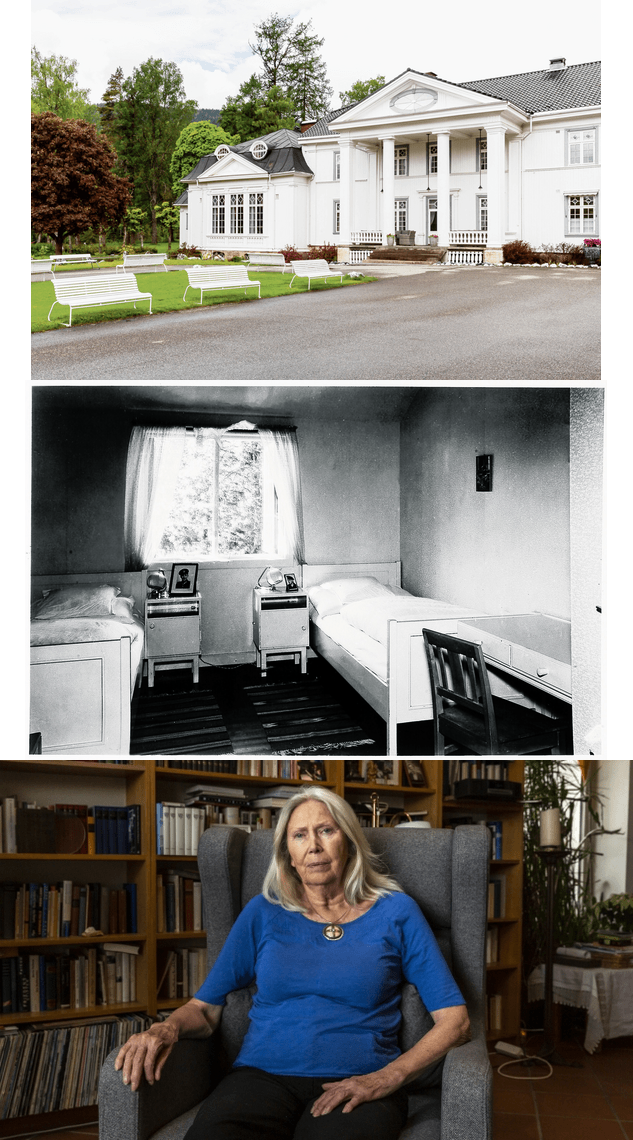
Hier moesten Ariërs geboren worden
Angeniet Berkers verdiepte zich in Lebensborn-huizen. Daar bevielen in WO II veel alleenstaande moeders van kinderen die zij niet mochten houden, maar die wél een toevoeging zouden zijn voor het Arische ras.
Fotoprijs
World Press Photo bekroont ‘piëta’ van de Gaza-oorlog
De World Press Photo van het Jaar toont een treurende Palestijnse vrouw in Gaza, met op schoot het lichaam van haar omgekomen nichtje dat ze omarmt en tegen zich aan klemt. Ook minder actuele foto’s werden bekroond.
In Beeld
Gazanen keren terug naar het verwoeste noorden
Sinds steeds meer Israëlische troepen zich terugtrekken uit het noorden van Gaza, keren veel ontheemde Palestijnen terug naar hun inmiddels verwoeste woonplaats. Op beelden is te zien hoe duizenden mensen met bagage, fietsen en karren over de levensgevaarlijke kustweg naar het noorden van Gaza lopen.
In beeld
De terugkeer van Oleksandr Revtjoech naar het burgerleven
Oleksandr Revtjoech stoot met een rechtse directe in op zijn tegenstander. Acht maanden nadat hij zijn linkerarm en het grootste deel van zijn linkerbeen heeft verloren door mijnontploffingen tijdens gevechten in Oekraïne revalideert hij in de boksring.
Meer In Beeld
Meer
Leven
Recensie
Van de kaart
Bij Backyard in Helmond komt het echte werk met de plak zwaardvis, ‘als rosbief gegaard’
De gerechten bij restaurant Backyard in Helmond vallen Hassnae Bouazza een beetje tegen, al zijn ze lekker. Wellicht waren haar verwachtingen te hooggespannen.
Column
Sarah Sluimer
Terwijl u dit leest ligt ergens een vrouw op een behandeltafel te huilen van de pijn
Sarah Sluimer
Japke-d. denkt mee
Je recyclede élk koffiebekertje, en: je wás er. Zelfs jij verdient salarisverhoging, en zo fix je dat
Het is weer tijd voor de functioneringsgesprekken. Zie je er tegenop? Nergens voor nodig, vindt Japke-d. Bouma. Zelfs jíj hebt recht op salarisverhoging. Pak deze lijst erbij, en bereken hoeveel!
Mijn Ouders
‘In 1968 vierden mijn ouders Koninginnedag op de Antillen’
Voor deze rubriek sturen lezers foto’s in van hun ouders. Deze week stuurde Siebe Anne Sonnema (1951) een foto in van Meindert Sonnema (1922-1997) en Jantje Visser (1923-2008), het echtpaar links.
Meer Leven
Meer
Carrière
Dilemma's op de werkvloer
Mag je klagen over je gratis maaltijd?
Je krijgt op kosten van je werkgever een diner tijdens elke avonddienst. Alleen: het is niet te eten, en je vermoedt dat de cateraar het zich zo makkelijk mogelijk heeft gemaakt om zoveel mogelijk te verdienen. Mag je daar wat van zeggen?
Zo werkt dat
Zo word je een vredestichter (op je werk)
Als er iets is waar managers een grote hekel aan hebben, dan is het ruzie in hun team. Jeanne Brett en Stephen Goldberg deden vele decennia onderzoek naar conflicten.
Rubriek
Spitsuur
‘We leven hier erg van dag tot dag’
Bertine van der Velde (44) en Ron Pierlot (52) runnen in de Achterhoek een pleeggezin met drie kinderen. Dat is hard werken; Bertine zegde haar baan op om fulltime voor de kinderen te kunnen zorgen. „Het is zwaar én het is mooi.”
Rubriek
DILEMMA'S OP DE WERKVLOER
Ik wil minder werken vanwege de werkdruk
Je hebt stress op je werk en neemt dat gevoel ook mee naar huis. Kun je zomaar minder gaan werken dan in je contract staat, en is dat ook de beste oplossing?
Meer Carrière
Meer
Tech en Media
tv-recensie
Inflatie aan woorden die op de zenuwen werken
Het woord inflatie figureert inmiddels in zo veel samenstellingen dat het zelf aan waarde inboet. En noem je dat dan weer inflatieflatie?
Sociale media
Toekomst TikTok onzeker, nu Amerikaanse Senaat heeft ingestemd met uitzonderlijk strenge aanpak
Het moederbedrijf van TikTok moet haar belang verkopen aan een Amerikaans bedrijf, of de populaire app uit China zal worden verboden in de VS. Het Congres wil met de dinsdagavond aangenomen wet afdwingen dat TikTok in Amerikaanse handen komt.
Recensie
series
‘The Jinx’ is terug, negen jaar na onthutsende ‘bekentenis’
In 2015 was ‘The Jinx’ een true crime-sensatie. De excentrieke miljonair Robert Durst leek in de slotaflevering drie moorden te bekennen. Regisseur Andrew Jarecki komt nu met een vervolgseizoen. Zijn er nieuwe onthullingen?
TV-RECENSIE
Niet altijd wil Peter Gillis zich voor de camera laten zien
Van je sokkel donderen is nooit plezierig, maar de familie Gillis kan zich er tenminste mee troosten dat ze er überhaupt op eentje hebben gestaan. Voor een van de eerste realitysterrenfamilies, de familie Tokkie, liep dat anders.
Meer Tech en Media
Meer
Sport
Doping
Dopingzaak van Chinese zwemmers uit 2021 roept veel vragen op – ‘Ze hadden direct geschorst moeten worden’
Onderzoek van de ARD en The New York Times wijst uit dat 23 Chinese zwemmers begin 2021 positief testten op een hartmedicijn. Straffen bleven uit, de Chinese zwemploeg won later dat jaar in Tokio drie keer olympisch goud. Hoe kon dit gebeuren?
Reportage
Finale KNVB-beker
Als het vuur is gedoofd, maakt Feyenoord de 1-0 en wint de KNVB-beker
In een finale die werd ontsierd door vuurwerk en onderbrekingen versloeg Feyenoord in de eigen Kuip NEC met 1-0.
Toerskiën
In het pikkedonker door de 'Tiefschnee' en langs afgronden – dit is de Patrouille des Glaciers
Hoe is het om mee te doen aan de zwaarste toerskiwedstrijd ter wereld, in de bergen van Zwitserland? Het parcours van de Patrouille des Glaciers (4.400 hoogtemeters) door de ogen van zesvoudig deelnemer Frits Vrijlandt.
Luik-Bastenaken-Luik
De vrouwenkoers eerst of gaan de mannen voor?
Wanneer gaat het vrouwenpeloton van start bij een klassieker? Met de groeiende populariteit van het wielrennen voor vrouwen wordt die vraag steeds belangrijker.
Meer Sport
Meer
Ondertussen
Chansons
Jacques Brel in Bergen: steek dat geld in je reet, schreeuwt de zanger
Zestig jaar na het roemruchte optreden van Jacques Brel in het Noord-Hollandse Bergen wordt het concert overgedaan.
Ikje
Snack
Ik zit in mijn auto op de parkeerplaats van een supermarkt. Boodschappen gedaan en mezelf getrakteerd op een snack van de broodafdeling.
Design
Openbare toiletpaleizen in Tokio spelen hoofdrol in Wim Wenders film ‘Perfect Days’
Prominent figureren ze in Wim Wenders’ nieuwe film: Tokio’s 17 openbare designtoiletten, ontworpen door toparchitecten.

:format(webp)/s3/static.nrc.nl/images/gn4/stripped/data114678240-c45da8.jpg)
:format(webp)/s3/static.nrc.nl/wp-content/uploads/2024/04/web-2404buivaccinatie.jpg)
/s3/static.nrc.nl/wp-content/uploads/2024/04/web-2404bincu.jpg)
/s3/static.nrc.nl/images/gn4/stripped/data114719770-c2906b.jpg)
/s3/static.nrc.nl/images/gn4/stripped/data114713055-f318f0.jpg)
/s3/static.nrc.nl/images/gn4/stripped/data114717279-0f3635.jpg)
/s3/static.nrc.nl/images/gn4/stripped/data114715514-91ff0a.jpg)
/s3/static.nrc.nl/hpe/b34db1d-web-2404BUIIsrealRafah.jpg)
/s3/static.nrc.nl/wp-content/uploads/2024/04/web-2404binvws.jpg)
/s3/static.nrc.nl/images/gn4/stripped/data114692116-438f36.jpg)
/s3/static.nrc.nl/wp-content/uploads/2024/04/web-2404buisydneystabbing2.jpg)
/s3/static.nrc.nl/wp-content/uploads/2024/04/web-2404binmiddelbare.jpg)
/s3/static.nrc.nl/images/gn4/stripped/data114691275-e05eb2.jpg)
/s3/static.nrc.nl/wp-content/uploads/2024/04/24132536/data114681432-b75585.jpg)
/s3/static.nrc.nl/images/gn4/stripped/data114692211-623577.jpg)
/s3/static.nrc.nl/wp-content/uploads/2024/04/web-2404ecomest.jpg)
/s3/static.nrc.nl/wp-content/uploads/2024/04/2024-04-23t225336z1696814404rc2mc7ajsoq1rtrmadp3argentina-protests-education.jpg)
/s3/static.nrc.nl/images/gn4/stripped/data114689352-091674.jpg)
/s3/static.nrc.nl/wp-content/uploads/2024/04/23145531/data114680416-46ee0a.jpg)
/s3/static.nrc.nl/images/gn4/stripped/data114715514-91ff0a.jpg)
/s3/static.nrc.nl/images/gn4/stripped/data114522440-83ae02.jpg)
/s3/static.nrc.nl/images/gn4/stripped/data114680237-81633a.jpg)
/s3/static.nrc.nl/wp-content/uploads/2024/04/web-2404bincu.jpg)
/s3/static.nrc.nl/bvhw/wp-content/blogs.dir/114/files/2019/01/zwol-coen-van-online-homepage.png)
/s3/static.nrc.nl/images/gn4/stripped/data114520844-72de26.jpg)
/s3/static.nrc.nl/images/gn4/stripped/data114522440-83ae02.jpg)
/s3/static.nrc.nl/bvhw/wp-content/blogs.dir/114/files/2019/07/roosmalen-marcel-van-online-homepage.png)
/s3/static.nrc.nl/wp-content/uploads/2024/04/23145531/data114680416-46ee0a.jpg)
/s3/static.nrc.nl/wp-content/uploads/2024/04/23154200/web-2404CULvosenhaas4.jpg)
/s3/static.nrc.nl/bvhw/files/2024/04/data114483435-970d83.jpg)
/s3/static.nrc.nl/images/gn4/stripped/data114645021-66ffc6.jpg)
/s3/static.nrc.nl/bvhw/files/2024/04/data114676509-8bb8ae.jpg)
/s3/static.nrc.nl/wp-content/uploads/2019/07/fritshome.png)
/s3/static.nrc.nl/bvhw/files/2024/04/data114680916-25a688.jpg)
/s3/static.nrc.nl/images/gn4/stripped/data114680237-81633a.jpg)
/s3/static.nrc.nl/wp-content/uploads/2024/04/22142053/web-2304CULLEV_ShirtPeter5.jpg)
/s3/static.nrc.nl/wp-content/uploads/2024/04/19104711/web-2304BUI_verkiezingeneu.jpg)

/s3/static.nrc.nl/wp-content/uploads/2024/04/web-2404binvws.jpg)
/s3/static.nrc.nl/wp-content/uploads/2024/04/web-2404binmiddelbare.jpg)
/s3/static.nrc.nl/bvhw/wp-content/blogs.dir/114/files/2021/08/koelewijn-jannetje-2021-03-1280-web.png)
/s3/static.nrc.nl/wp-content/uploads/2024/04/web-2404ecomest.jpg)
/s3/static.nrc.nl/images/gn4/stripped/data114693408-1bfe88.jpg)
/s3/static.nrc.nl/images/gn4/stripped/data114695808-7a2380.jpg)
/s3/static.nrc.nl/images/gn4/stripped/data114690843-d7202b.jpg)
/s3/static.nrc.nl/images/gn4/stripped/data114684429-4d57e8.jpg)
/s3/static.nrc.nl/images/gn4/stripped/data114693201-8ff096.jpg)
/s3/static.nrc.nl/images/gn4/stripped/data114689352-091674.jpg)
/s3/static.nrc.nl/images/gn4/stripped/data114686046-3f6e8b.jpg)
/s3/static.nrc.nl/images/gn4/stripped/data114685669-4f9220.jpg)
/s3/static.nrc.nl/bvhw/files/2024/04/data114685942-5baf7e.jpg)
/s3/static.nrc.nl/images/gn4/stripped/data114685921-aca204.jpg)
/s3/static.nrc.nl/images/gn4/stripped/data114516488-c0d2a7.jpg)
/s3/static.nrc.nl/wp-content/uploads/2024/04/23155612/data114646640-275ad4.jpg)
/s3/static.nrc.nl/wp-content/uploads/2024/04/23152921/data114640284-b4235e.jpg)
:format(jpeg):fill(f8f8f8,true)/s3/static.nrc.nl/images/gn4/data114437478-909585.png)
/s3/static.nrc.nl/wp-content/uploads/2024/04/24112916/onderstroomFI2.jpg)
/s3/static.nrc.nl/images/gn4/stripped/data114679998-fae600.jpg)
:format(jpeg):fill(f8f8f8,true)/s3/static.nrc.nl/bvhw/wp-content/blogs.dir/114/files/2019/11/roodnat5x3.png)
/s3/static.nrc.nl/bvhw/files/2024/04/data114680638-107bd9.jpg)
/s3/static.nrc.nl/wp-content/uploads/2024/04/18103842/Copy-of-Copy-of-Homepage-gifje-met-fade.jpg)
/s3/static.nrc.nl/inbeeld/files/2024/04/web-inbeeldgazareturn11.jpg)
/s3/static.nrc.nl/inbeeld/files/2024/04/1104ingukraineamputees11.jpg)
/s3/static.nrc.nl/wp-content/uploads/2024/04/23150213/data114524521-66da65.jpg)
/s3/static.nrc.nl/taxonomy/5e08f1d-Sluimer%252C%2520Sarah%252004_2023%252011_1280%2520%2528homepage%2529.png)
/s3/static.nrc.nl/wp-content/uploads/2024/04/22162030/data114517142-cc6a95.jpg)
/s3/static.nrc.nl/bvhw/files/2024/04/data114644031-9e8b31.jpg)
/s3/static.nrc.nl/wp-content/uploads/2024/04/22104011/web-2204ECO_dilemma_KRAAKMAN.jpg)
/s3/static.nrc.nl/bvhw/files/2024/04/data114519270-f0eef7.jpg)
/s3/static.nrc.nl/images/gn4/stripped/data114479181-0de2bf.jpg)
/s3/static.nrc.nl/wp-content/uploads/2024/04/14184621/data114224455-da6bc1.jpg)
/s3/static.nrc.nl/images/gn4/stripped/data114674470-e665c7.jpg)
/s3/static.nrc.nl/images/gn4/stripped/data114685960-3db977.jpg)
/s3/static.nrc.nl/bvhw/files/2024/04/data114676350-0ff4cb.jpg)
/s3/static.nrc.nl/images/gn4/stripped/data114674470-77056e.jpg)
/s3/static.nrc.nl/images/gn4/stripped/data114645735-0554c4.jpg)
/s3/static.nrc.nl/images/gn4/stripped/data114617533-1b88eb.jpg)

/s3/static.nrc.nl/images/gn4/stripped/data114520628-00178b.jpg)
/s3/static.nrc.nl/images/gn4/stripped/data114522869-2fc3ac.jpg)
:format(jpeg):fill(f8f8f8,true)/s3/static.nrc.nl/bvhw/wp-content/blogs.dir/114/files/2019/07/ikje5bij3-1.png)
/s3/static.nrc.nl/bvhw/files/2024/04/web-2304achtokyo4.jpg)